THE PRESS
Hot, but still solid
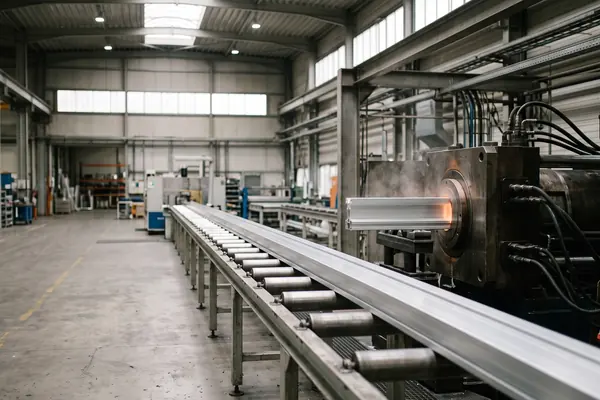
Aluminium melts at about 660 °C. The billet is heated to above 375 °C and up to about 500 °C, then a hydraulic ram crushes it against the die until it squeezes through.
See the numbers doodlextrude
HOW ALUMINIUM EXTRUSION WORKS
Most aluminium window frames began as a warm, solid log.
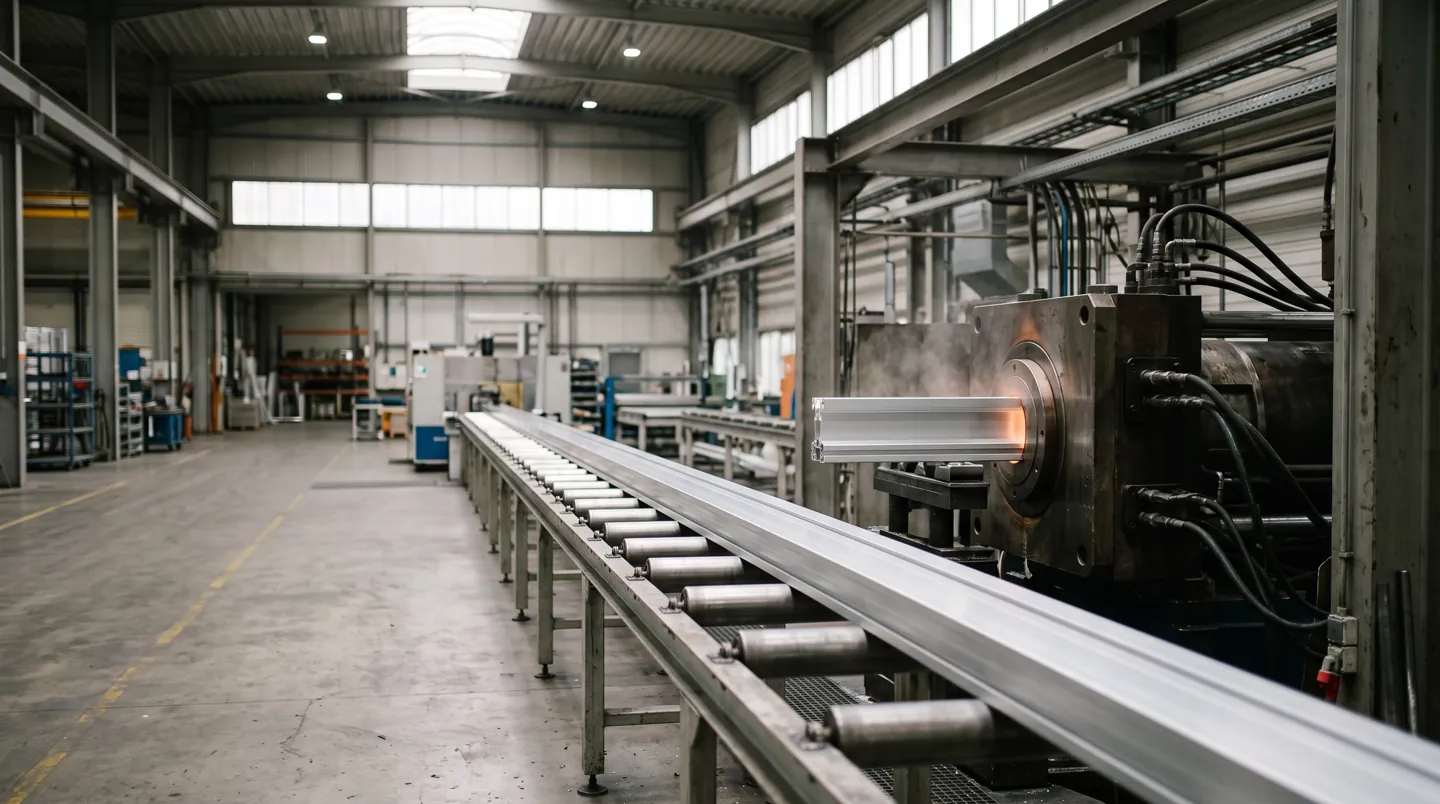
In extrusion a softened aluminium billet is pushed through a shaped steel die, and it comes out the other side as one long profile with the same cross-section all the way along: a frame, a rail, a tube or a heat sink.
ONE SHAPE all the way along
Compare the alloysTHE SHORT ANSWER
Extrusion works like a toy dough press.
The metal stays solid the whole time.
THE PRESS
Aluminium melts at about 660 °C. The billet is heated to above 375 °C and up to about 500 °C, then a hydraulic ram crushes it against the die until it squeezes through.
See the numbersTHE DIE
The die is a steel disk, normally H13 tool steel, with the profile's outline cut through it. Hollow dies split the metal around a mandrel, and it welds back together under pressure.
Read a profileTHE FINISH
Profiles are quenched, aged, cut and often anodised or painted. Bare aluminium already grows a thin, clear oxide film that protects it in many uses.
Compare alloys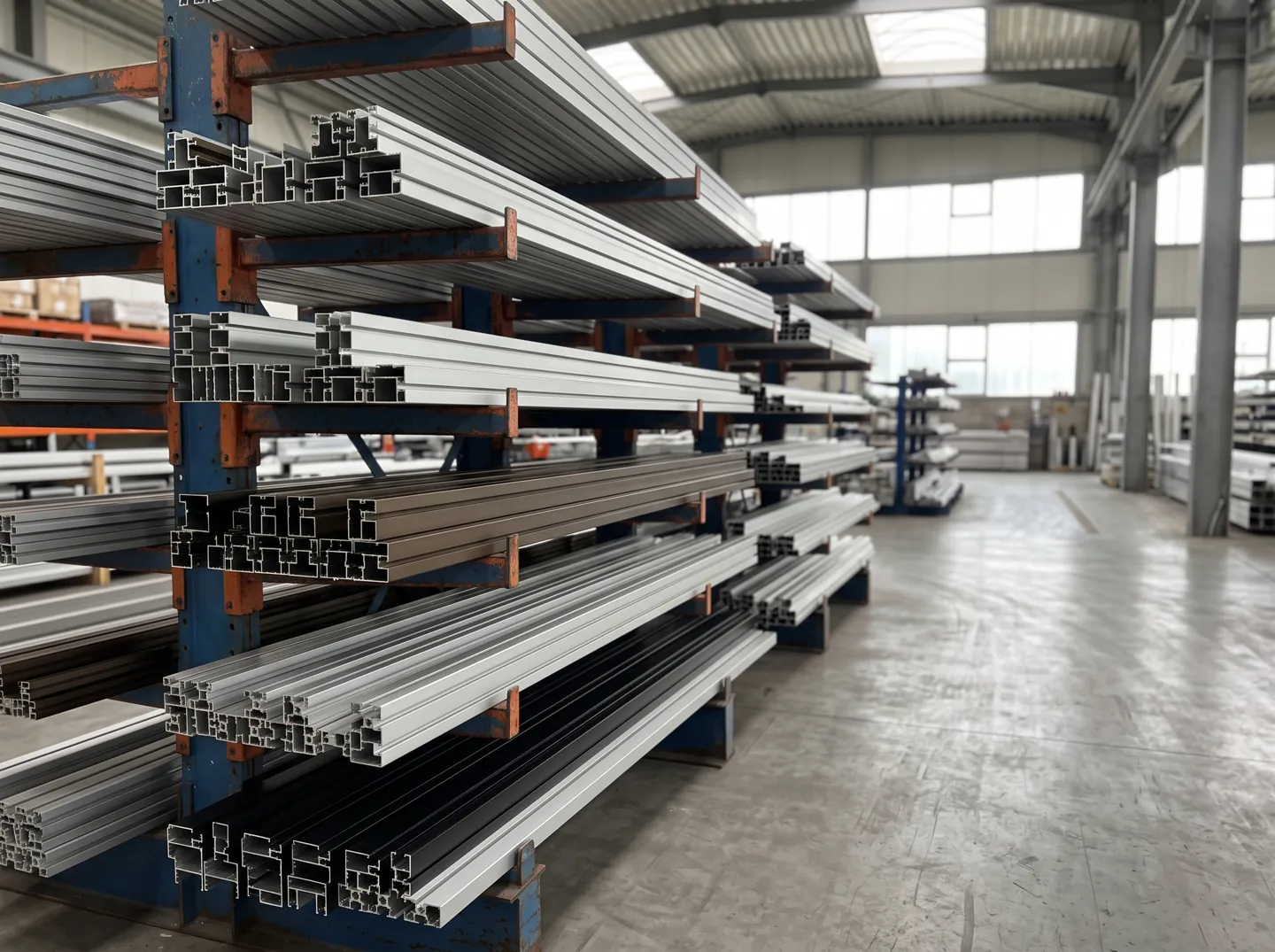
FOUR THINGS TO LOOK FOR
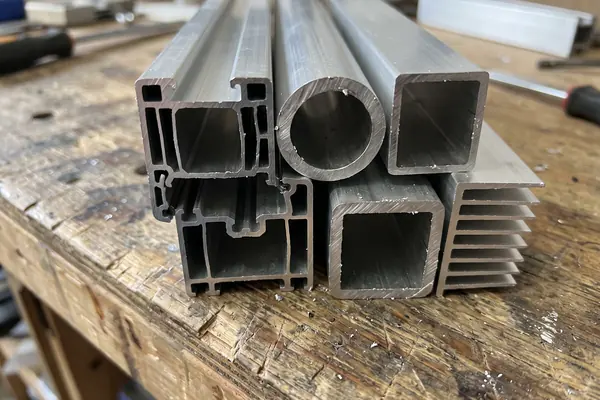
Pick up an aluminium curtain rail, a window section or a shelf bracket and you can often tell how it was made.
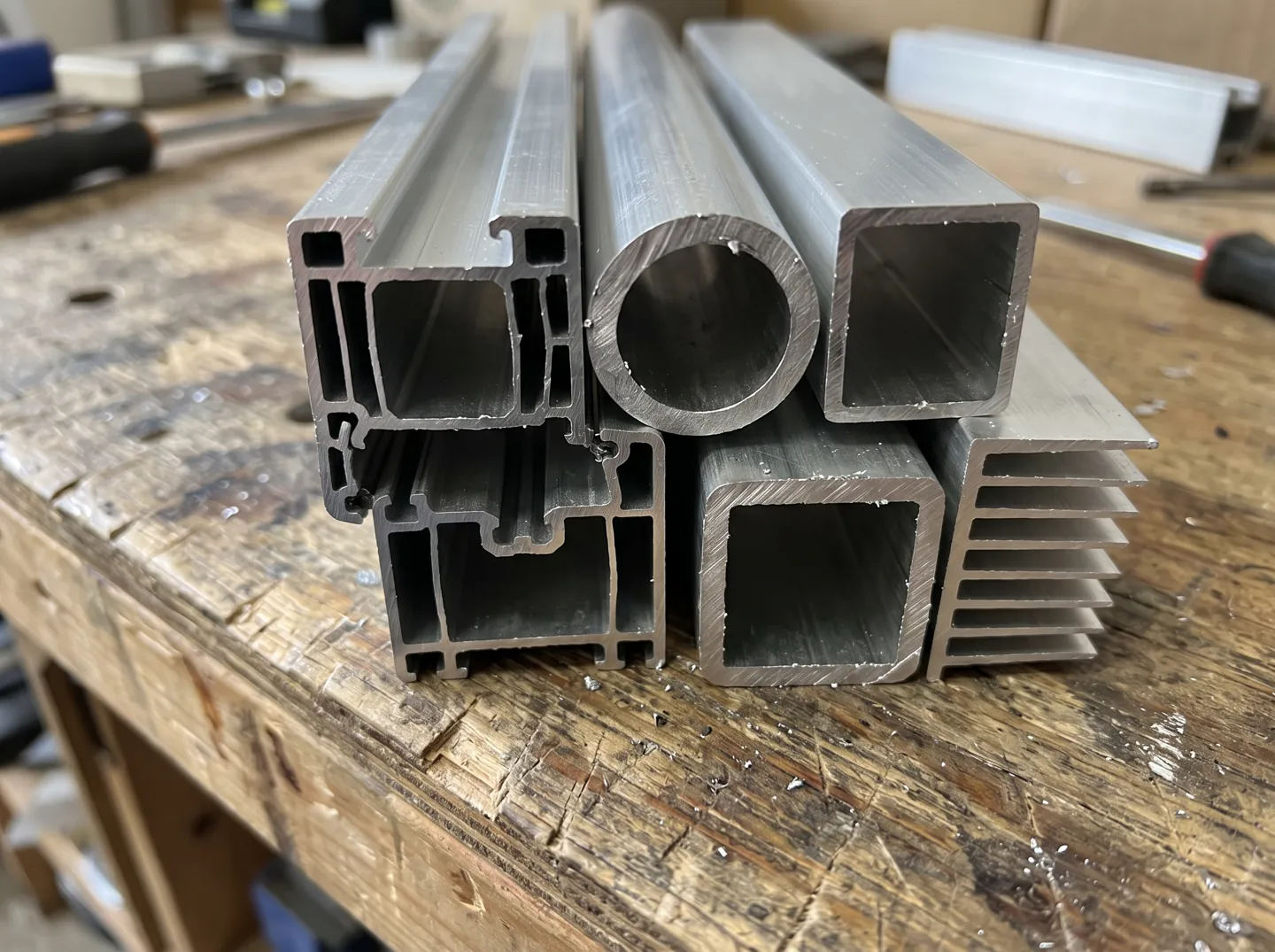
An extrusion has the same cross-section all along its length, because every part of it came through the same die opening.
Closed hollows mean a hollow die: the metal split around a mandrel and welded back together under pressure inside the die.
A code such as 6063-T5 means a 6xxx (magnesium and silicon) alloy, cooled from an elevated temperature and artificially aged.
Anodised, painted or bare: anodising thickens aluminium's natural oxide layer, which improves corrosion resistance and can take a dye.
TWO NUMBERS WORTH KNOWING
One figure on the force involved,
one on how much metal ends up in the product.
100–15,000 tons
What extrusion presses can exert
The Aluminum Extruders Council says hydraulic extrusion presses exert from 100 to 15,000 tons of pressure, and a press's capacity decides how large a profile it can make.
PRESS FORCE · AEC
76%
Share of extruded metal that ends up in the product
A University of Cambridge study of global aluminium flows in 2007 found that one quarter of aluminium products are extruded, at a comparatively low material yield of 76%. The rest is scrap that goes back to be remelted.
MATERIAL YIELD · CAMBRIDGE
The Cambridge study (Cullen and Allwood, Environmental Science and Technology) argues that avoiding scrap at source matters even more than recycling it.
WHICH ALLOY FAMILY?
Extrusion alloys are grouped by their main added element. Pick a series to see how strong it is and what it is good at. The bar shows relative strength.
Summarised from the Aluminum Extruders Council table of alloy designations. 4xxx (silicon) alloys are not made as extrusions.
RECYCLING
The Aluminum Extruders Council says aluminium made from scrap uses over 92% less energy than primary production, and that North American extruders took 55% of their metal from scrap in 2021. Its properties do not degrade with recycling.
The Cambridge study adds a caveat. The well-known claim of up to 95% less energy compares melting scrap with electrolysis only. Diluting scrap with 5% pure aluminium nearly doubles the energy, and with 25% recycling needs nearly one third of the energy of primary production.
Questions
No. The billet is softened in a furnace but stays solid. The AEC gives billet temperatures above 375 °C and up to about 500 °C, depending on the alloy, while aluminium melts at about 660 °C.
A hollow die holds a mandrel in the middle. The metal splits around the mandrel's supports and welds back together under the pressure needed to push it through the gap, forming a tube.
Die makers adjust the bearing length, the land the metal flows over inside the die. A longer bearing slows the metal, so thick sections are slowed to match thin ones.
6063 is a 6xxx series alloy (magnesium and silicon). T5 means it was cooled from an elevated temperature and artificially aged. T6 means solution heat-treated and artificially aged.
It is an electrolysis process that makes the oxide layer on aluminium's surface thicker, improving corrosion resistance. The thickened oxide can also be coloured with dyes.
Updated
ABOUT THIS NAME
doodlextrude.com is part of the DoodleSale portfolio. It isn't in an auction right now, but you can ask about leasing it.